Leadership today is less about getting answers right and more about how leaders show up while finding them. This month, we explore three everyday leadership behaviors shaping trust and performance: choosing respect over approval when decisions are hard, guiding reliability without letting it define roles, and why attention has become a leadership discipline, not a personal preference.
Each story isn’t just a headline—it’s a view worth bringing into focus.
January 2026 / Issue 3

Why Leaders Should Choose Respect Over Approval
When doing what’s right conflicts with what people want to hear
A recent article in Entrepreneur highlights a leadership moment every leader encounters: the point at which the right decision for the organization conflicts with what people want to hear. This is not about being unkind or distant. It is about understanding the difference between seeking approval and earning respect.
The leadership perspective: Approval feels good in the moment. It comes with nods, agreement, and immediate harmony. When leaders shape decisions to preserve approval, by being unclear, delaying conversations, or avoiding direct feedback, leadership shifts quietly. What often feels like care in the moment becomes a pattern of minimizing discomfort instead of providing direction.
Why it’s worth zooming in: People do not lose trust because leaders make hard decisions. They lose trust when leaders appear unsure of their own decisions or when it looks like decisions shift in response to reactions. When approval becomes the priority, teams begin to treat decisions as negotiable rather than directional. Over time, respect erodes not because leaders were wrong, but because leadership no longer feels steady.
How leaders can sharpen focus: Leaders strengthen teams by choosing respect over approval. In practice, that means:
- Being clear about the decision and the reasoning behind it, so people understand what is being protected or enabled.
- Creating space for questions, concerns, and feedback, without rushing to defend or dismiss reactions.
- Listening with presence, especially when decisions create discomfort.
- Staying open to insight, recognizing that leadership is not exercised alone and that people often help refine how decisions are carried forward.
Respect grows when people feel seen and heard and trust that leadership is both clear and human.

When Reliability Quietly Becomes Expectation
The people who say yes most often are rarely trying to overextend themselves. They are capable, committed, and eager to contribute. A recent Forbes article describes this familiar workplace dynamic. Over time, that reliability attracts more requests, more responsibility, and more opportunities to step in. What begins as helpfulness gradually becomes a pattern.
The leadership perspective: Leaders often see this behavior as a strength. High performers raise their hand, fill gaps, and keep work moving. In fast-paced environments, that willingness is easy to reward. But without guidance, these individuals can drift into becoming the default helper, taking on work that others could share or own. What looks like initiative can quietly turn into overextension and misalignment.
Why it’s worth zooming in: Left unchecked, this dynamic affects more than workload. High performers spend less time collaborating, prioritizing, and shaping work, and more time absorbing it. They become essential to execution but less visible in higher-level thinking. Teams lose balance. Leaders lose leverage. The issue isn’t that people are helping too much. It’s that leadership hasn’t helped them decide where their help matters most.
How leaders can sharpen focus: The work isn’t to discourage helpfulness. It’s to guide it.
- Making priorities explicit: Help high performers see what truly requires their involvement and what does not. Clarity prevents capable people from absorbing work that should be shared or delegated.
- Shifting from absorption to collaboration: Encourage reliable contributors to involve others instead of taking work on alone. This builds team capability and reduces hidden dependency.
- Normalizing strategic “no’s”: Coach individuals to say no when work doesn’t align with priorities, and reinforce that this is a sign of judgment, not disengagement.
- Redirecting effort toward impact: Guide high performers toward work that shapes direction, not just execution. Availability shouldn’t define value.
When leaders actively coach this discernment, reliability becomes a leadership asset rather than a quiet limiter of growth.
Why Attention Has Become a Leadership Liability
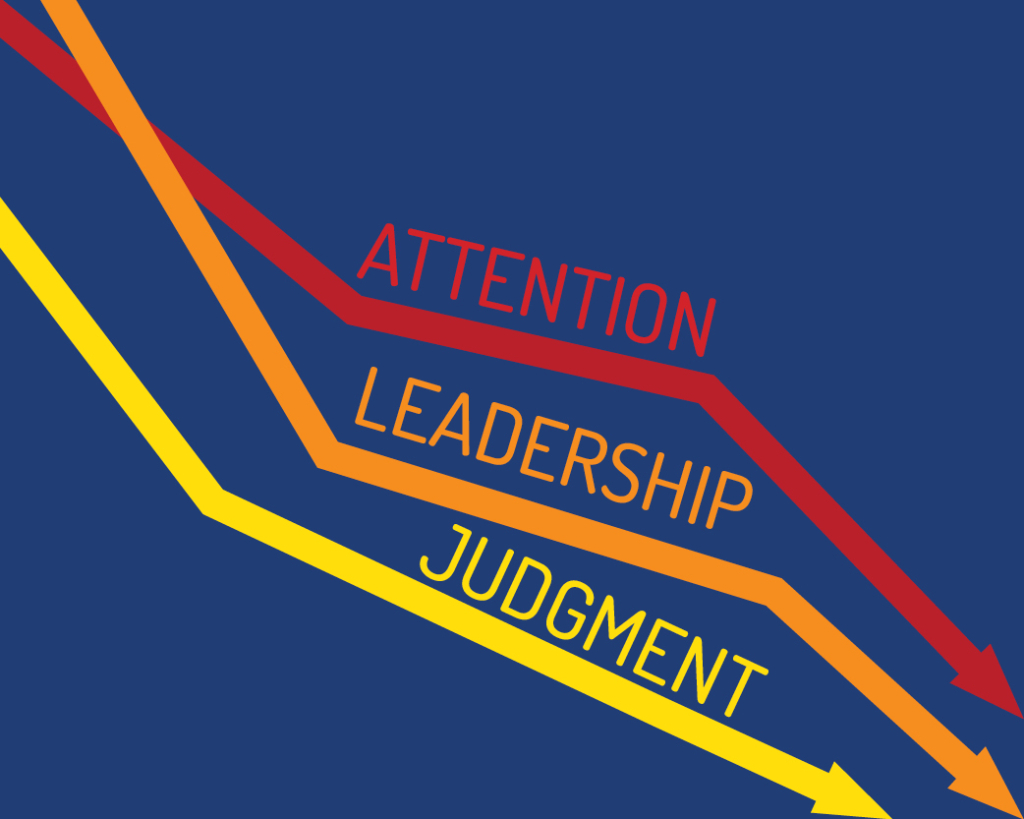
The human mind is meant to wander. That isn’t the problem. The problem is that leadership roles now demand sustained focus in environments that actively pull attention apart. In a recent episode of HBR On Leadership, neuroscientist Amishi Jha explains that while distraction is natural, attention itself is a skill that requires training. Under constant pressure, connectivity, and interruption, untrained attention degrades. When that happens, leaders lose clarity, judgment becomes reactive, and listening narrows. This is why attention has become a leadership discipline, not a personal preference.
The leadership perspective: Many leaders operate with an unspoken assumption that focus will be there when it’s needed. Experience, urgency, and momentum carry them through complex days, so attention is treated as automatic rather than intentional. Leaders continue producing, deciding, and moving forward, often without noticing how scattered their attention has become. The impact doesn’t show up immediately. It shows up over time, in how consistently leaders can be present, steady, and clear when pressure is highest.
Why it’s worth zooming in: When attention breaks down, leaders don’t just feel more distracted. Teams feel it. Conversations get shorter. Decisions feel rushed or unclear. Emotional reactions show up faster, while listening shows up less. Over time, people stop bringing issues forward because leaders seem unavailable or already overloaded. The cost isn’t distraction. It’s trust, clarity, and the quality of decisions being made under pressure.
How leaders can sharpen focus: The work isn’t to eliminate distraction. It’s to train attention.
- Practice daily attention training: As Amishi Jha’s research shows, as little as 12 minutes a day of focused attention practice strengthens the ability to notice distraction and deliberately return to what matters.
- Use breath as a reset tool: The practice is simple: place attention on the breath, notice when the mind wanders, and bring it back. This trains the same skill leaders rely on in high-pressure moments.
- Apply the skill in real time: In the middle of the day, leaders reset attention by stopping, taking one conscious breath, observing what’s happening internally and externally, and proceeding intentionally.
This isn’t a wellness habit. It’s a leadership discipline. Without it, attention erodes under pressure. With it, judgment, presence, and clarity remain intact—even in demanding environments.