Driving change, raising the bar, and being indispensable can all look like strong leadership. But each can become a liability when taken too far. This month’s Leadership Lens looks at three leadership instincts worth questioning, and what leaders might need to do differently.
Each story isn’t just a headline—it’s a view worth bringing into focus.
September 2026 / Issue 11
When Transformation Becomes Avoidance
Researchers from MIT Sloan Management Review spent four years following a professional services firm through a major transformation designed to reverse declining performance. They logged nearly 760 hours observing leadership and project-team meetings, conducted more than 300 interviews, and watched the effort unfold from beginning to end.
The company had many of the things transformations are supposed to need: urgency, a clear vision, committed leaders, motivated employees, and plenty of activity.
It still failed.
The researchers traced part of the problem to something they call “defensive organizing.” Anxiety about the company’s future initially helped mobilize people around change. But because leaders struggled to acknowledge and work with that anxiety, it eventually began shaping the transformation itself. People stayed busy, new initiatives were launched, and the appearance of progress continued while many of the behaviors that needed to change remained in place.
| The leadership perspective:
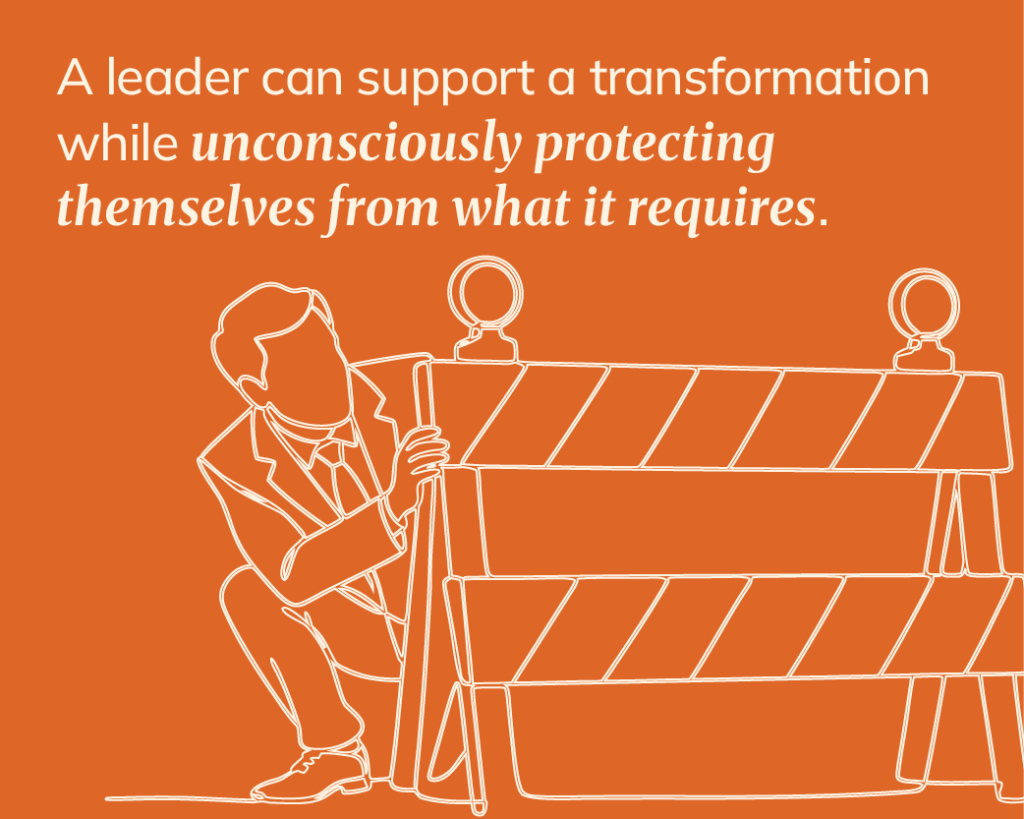
Leaders often think about transformation in terms of what the organization needs to become. Far less attention gets paid to what the people leading it may have to give up along the way. Authority. Expertise. Familiar ways of working. A role they’ve been successful in. Even an identity they’ve spent years building. That creates an uncomfortable possibility: a leader can genuinely support a transformation while unconsciously protecting themselves from what it requires of them. The strategy says change. Their behavior quietly says, not this part.
| Why it’s worth zooming in:
This is one reason transformation can be so difficult to diagnose from the top. Leaders naturally look for evidence of whether the organization is changing: new structures, new processes, new priorities, new capabilities. But some of the most consequential barriers may be sitting inside the leadership team itself. If the transformation requires leaders to operate differently, measuring progress without examining what leaders themselves are having trouble relinquishing leaves a significant part of the change invisible.
| How leaders can sharpen focus:
- Make it personal. Ask each member of the leadership team what this transformation requires them to do differently, not just what they need their teams to do differently.
- Name what’s at stake. Identify what leaders may feel they are losing as the organization changes, whether that’s authority, expertise, control, status, or familiarity.
- Look for contradictions. Pay attention to places where leaders publicly support the change but continue operating in ways that reinforce the old model.
- Redefine the evidence. Measure transformation not only by what has been launched or reorganized, but by what has actually changed in how leaders behave.

The Courage to Be Bad at Something
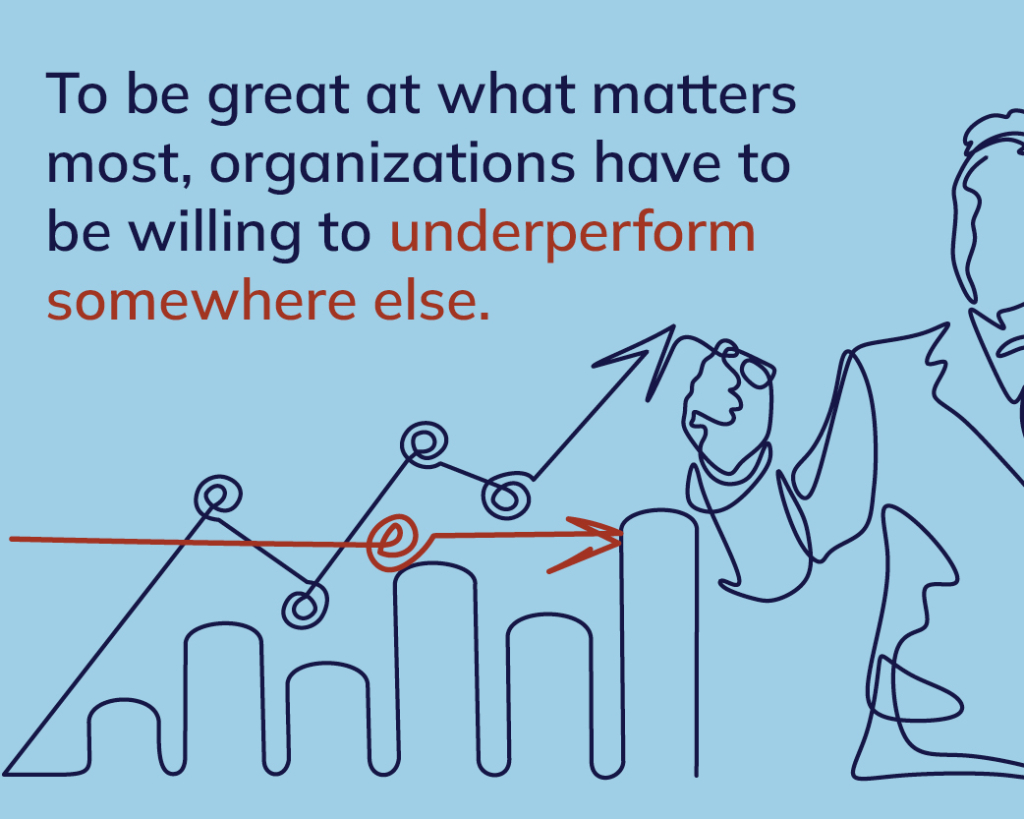
In a recent episode of Fixable, featured on Harvard Business Review, leadership coach Anne Morriss and Harvard Business School professor Frances Frei make a provocative argument about strategy: to be great at what matters most, organizations have to be willing to underperform somewhere else.
Frei points to the original MacBook Air.
Apple wanted to create an extraordinarily thin, lightweight laptop. But getting there required trade-offs. The computer had no internal CD-ROM drive, and other features, like the battery, had to be good enough rather than best in class.
Frei argues that this is one of the harder parts of strategy. Deciding what not to do is difficult enough. Deciding what you will do, but intentionally not do particularly well, can be even harder.
| The leadership perspective:
Most organizations don’t suffer from a shortage of things worth doing well. That’s exactly the problem. When everything deserves excellence, resources get spread across everything, and the organization loses the ability to be exceptional where it matters most. The harder leadership discipline isn’t simply prioritizing what matters. It’s deciding where “good enough” is actually good enough and being willing to live with the discomfort that creates.
| Why it’s worth zooming in:
Leaders often add priorities one decision at a time. Improve this experience. Strengthen that capability. Fix this process. Raise the standard over there. Each decision can be completely reasonable on its own. But collectively, they create an organization trying to outperform everywhere at once. Eventually the trade-offs still happen. They just happen accidentally, through exhausted people, diluted attention, slower execution, and inconsistent quality.
Choosing where not to excel doesn’t lower the bar. It protects the organization’s ability to raise it where it counts.
| How leaders can sharpen focus:
- Define where you’ll win. Be explicit about the few things your organization needs to be exceptional at, not simply competent.
- Name “good enough.” Identify where solid performance is sufficient so people aren’t spending disproportionate time perfecting work that isn’t strategically differentiating.
- Trace the investment. Look at where time, talent, and resources are actually going and ask whether they reflect the priorities you say matter most.
- Watch for creeping excellence. When someone proposes raising the bar in another area, ask what will receive less attention as a result.

Could Your Team Thrive Without You?
“I’ve been working for 30 years straight, and I want a break.”
A senior executive shared this with Stop At Nothing’s Ted Powell while they were discussing his development and that of his team. The idea of a sabbatical was appealing, until the executive thought about what would happen while he was gone.
His company was pursuing an ambitious growth goal, and he was convinced his team couldn’t deliver on it without him.
At first, that sounded like a perfectly good reason to stay.
Then the conversation shifted.
What if the fact that the team couldn’t succeed without him wasn’t evidence of how necessary his leadership was, but a signal that too much of the organization’s success still depended on it?
| The leadership perspective:
Being indispensable can feel like evidence of strong leadership. You’re the person people turn to. You know the history. You make the difficult calls. You keep things moving. But there’s a point where being needed becomes something else entirely.
If decisions, momentum, or accountability consistently weaken when one leader steps away, leadership hasn’t been multiplied. It has been concentrated.
| Why it’s worth zooming in:
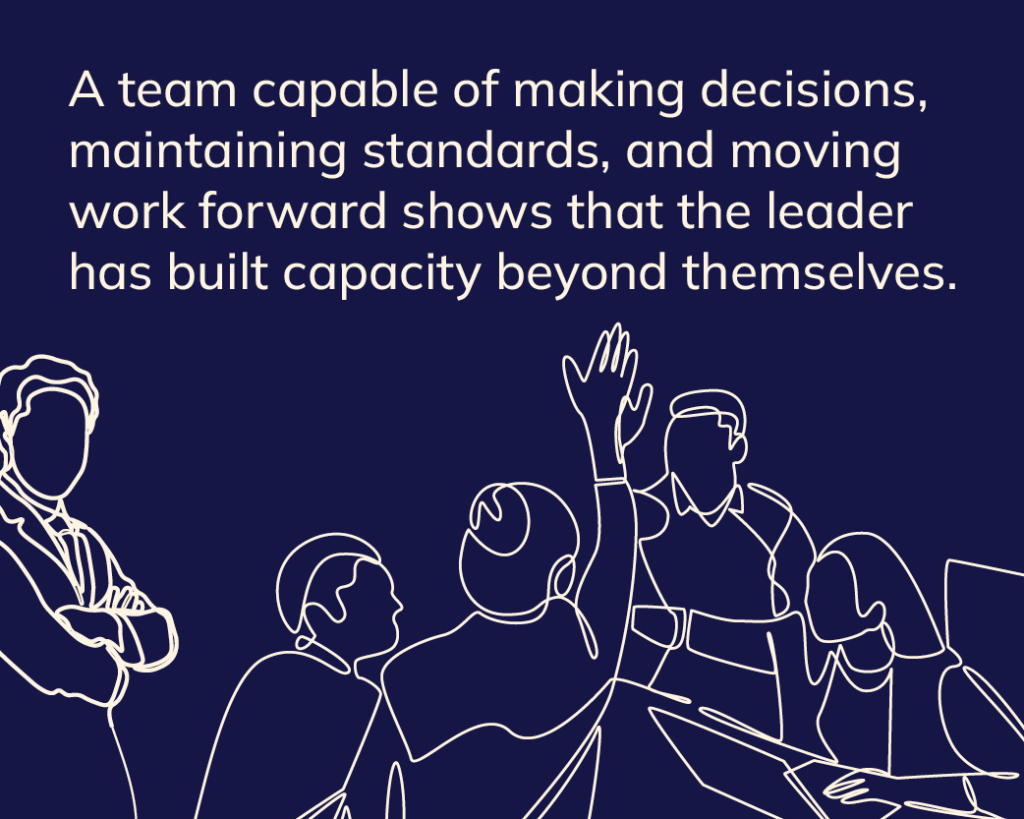
The real test of leadership may not be what happens when you’re in the room. It’s what continues without you. A team that can challenge one another, make difficult decisions, maintain standards, and move the work forward without waiting for the leader hasn’t made that leader less valuable. It’s evidence that the leader has built capacity beyond themselves. And sometimes discovering where that hasn’t happened requires imagining something most leaders rarely consider: leaving.
| How leaders can sharpen focus:
- Run the absence test. Imagine being completely unavailable for six months. Where would momentum slow, decisions stall, or accountability become unclear?
- Find the dependencies. Notice which decisions, relationships, and responsibilities still come back to you when someone else could own them.
- Step out deliberately. Choose an area where your involvement is no longer necessary and give someone else genuine authority to lead it.
- Resist being the answer. When your team brings you a problem, consider whether solving it yourself builds capability or reinforces dependence.