Before a major initiative fails, someone usually sensed the risk. Before a manager disengages, the strain was often building for months. And before a misunderstanding becomes conflict, an assumption has usually filled in the missing information. This month’s Leadership Lens looks at three situations that are easy to misread—and what leaders can do earlier.
Each story isn’t just a headline—it’s a view worth bringing into focus.
July 2026 / Issue 9
Why Imagining Failure Can Help a Team Succeed
Thomas Edison’s work to develop a practical lightbulb involved experiment after experiment that did not produce the result he wanted. A line often attributed to him captures how he approached the process:
“I have not failed. I’ve just found 10,000 ways that won’t work.”
Each attempt revealed something—a material to eliminate, an assumption to reconsider, or a direction unlikely to work. But does a team always have to experience failure before it can learn from it?
In an episode of The Curiosity Shop called “How This Podcast Could Fail,” Brené Brown and Adam Grant explore that exact question through a premortem, a practice where teams imagine an unsuccessful outcome before it happens and work backward to identify the possible causes.
They imagine themselves a year in the future and assume the podcast has failed. Their concerns extend beyond the content itself. They consider whether disagreement could lose its foundation of care and respect, and whether different expectations about ownership and communication could create tension. The exercise brings those conversations forward, while there is still time to do something with them.
| The leadership perspective:
Leaders tend to focus risk conversations on the plan—the timeline, resources, responsibilities, and expected outcomes. But execution is also shaped by what happens between people.
Unspoken expectations, different decision-making styles, and unresolved tension can undermine even a strong strategy. Yet relational risks are often harder to raise because they can feel personal or be interpreted as a lack of confidence in the work.
A premortem can reveal both the risks facing an initiative and whether the team has created enough trust to name them.
| Why it’s worth zooming in:
People often see warning signs before leaders hear about them. The cautious person may question an assumption but worry about being labeled negative. The quieter team member may notice something others have missed but hesitate to interrupt the momentum.
A premortem changes the invitation. Raising concerns is no longer an act of resistance. It is the purpose of the conversation. The goal is not to predict every failure. It is to make it easier for people to share what they may already sense but have not yet said.
| How leaders can sharpen focus:
Before beginning an important initiative, create space to learn from failure in advance.
- Imagine a specific future. The initiative has failed six months or a year from now. What caused it?
- Look beyond the plan. Consider how communication, ownership, working styles, or unresolved tension could affect execution.
- Let people think independently first. Ask everyone to write down concerns before discussing them together.
- Turn concerns into agreement. Clarify what the team can change or establish now while there is still time.

When the People Responsible for Engagement Start Disengaging
Global employee engagement has fallen for the second consecutive year. But the decline is not happening evenly.
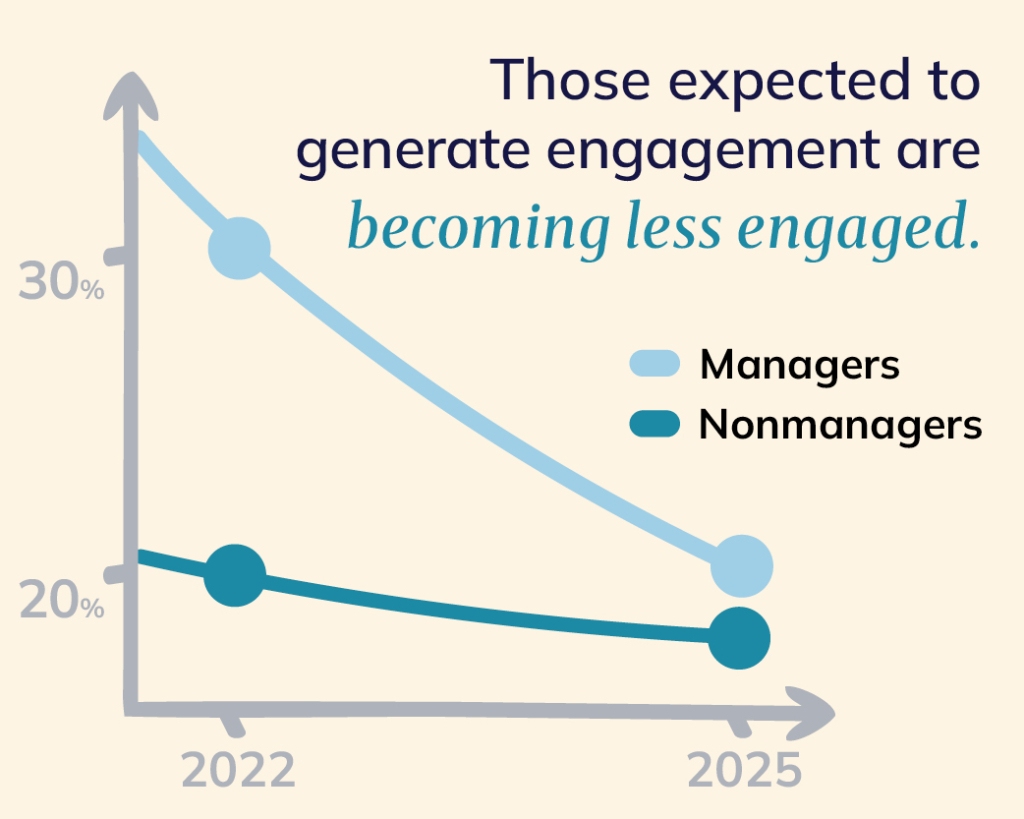
According to Gallup’s State of the Global Workplace 2026, manager engagement fell from 31% in 2022 to 22% in 2025. Over the same period, engagement among nonmanagers moved only slightly, from 20% to 19%.
Managers account for most of the recent global decline.
That matters because managers are often positioned as the solution to employee disengagement. They are asked to check in more frequently, communicate change, coach performance, support wellbeing, introduce new technology, and keep people connected to the organization’s goals.
But the people expected to generate engagement are becoming less engaged themselves.
| The leadership perspective:
When manager engagement declines, the instinct may be to focus on the individual. Does this person need to manage their time better, become more resilient, or reconnect with their purpose?But a pattern this widespread points to something beyond individual motivation.
Managers sit where organizational expectations and employees’ daily experiences meet. They are often expected to translate decisions they did not make, answer questions they were not prepared for, and maintain stability through changes they are still processing themselves.
Declining manager engagement may not simply be a problem to correct. It may be one of the clearest signals of what the organization is asking people to absorb.
| Why it’s worth zooming in:
Organizations frequently measure engagement through the experience of employees while treating managers primarily as the people responsible for improving it.
That creates a blind spot.
When managers lose energy or connection, the effects rarely remain contained. Their ability to communicate clearly, remain curious, recognize good work, and stay present during difficult conversations can begin to narrow. The issue then appears elsewhere—as a team communication problem, resistance to change, declining morale, or weaker performance.
Adding another engagement responsibility to the manager’s role may address the symptom while increasing the pressure underneath it.
| How leaders can sharpen focus:
Improving manager engagement begins with understanding the experience behind the numbers.
- Ask what managers are carrying. Look beyond workload to the emotional and relational demands of translating change for others.
- Clarify what they own. Managers need to know where they can make decisions and where they are being asked to communicate decisions made elsewhere.
- Prepare them before expecting them to lead. Give managers time to understand and process major changes before asking them to create confidence for their teams.
- Create support among peers. Managers need places where they can speak candidly, compare experiences, and work through challenges without having to perform certainty.

When We Assume We Know Why
A man was crossing a river alone in his boat.
The water was calm until another boat suddenly collided with his.
The man became angry.
He called out to the person he assumed was steering, but no one answered.
His frustration grew.
How could someone be so careless?
Why weren’t they paying attention?
Then he looked into the other boat.
It was empty.
The boat had simply drifted into his path. There was no careless person ignoring him. No one had chosen to disrupt his journey. The collision had not changed. But the moment the man realized the boat was empty, the story he had created around it fell away.
| The leadership perspective:
Leaders do not respond only to what happens. They also respond to what they believe it means.
A team member questions a decision, and the leader hears resistance. Someone remains quiet in a meeting, and the group assumes agreement. A deadline is missed, and the story becomes one of poor commitment. A brief email is read as frustration or disrespect.
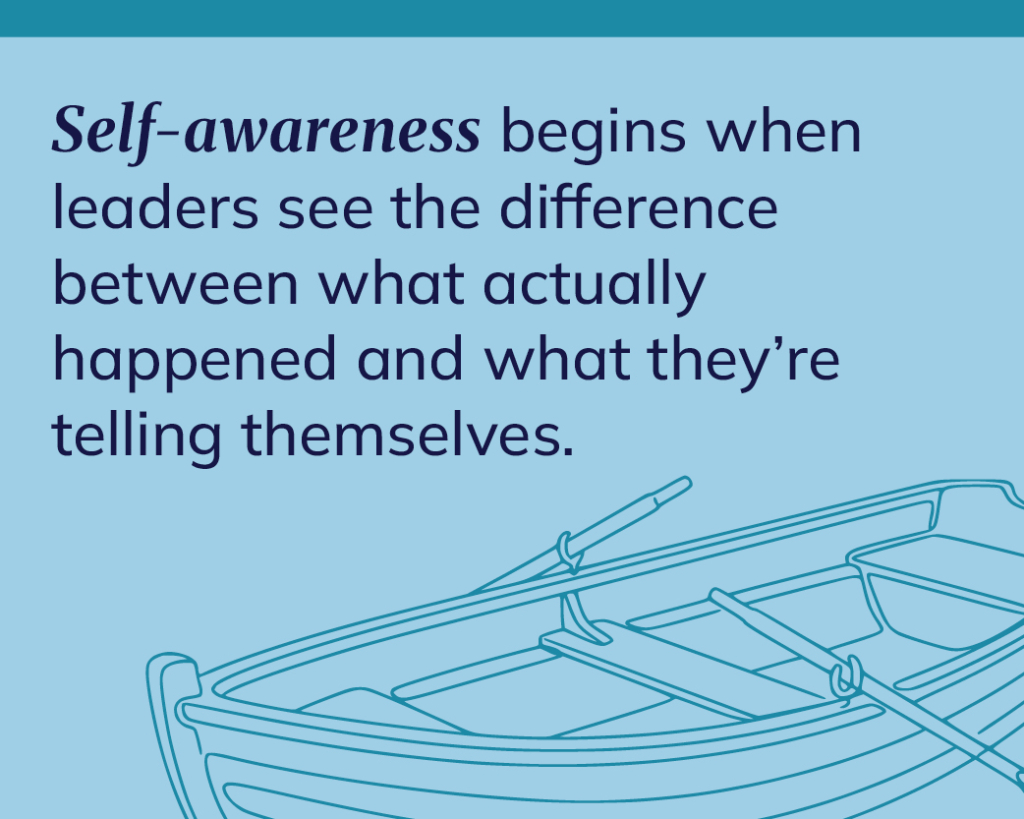
Sometimes those interpretations are accurate. But self-awareness begins when leaders notice the difference between what happened and the story they are telling themselves about why it happened.
Without that pause, leaders can respond to an intention that may not exist.
| Why it’s worth zooming in:
Once we believe we understand someone’s motives, curiosity begins to narrow. We notice what supports our interpretation and overlook what might challenge it.
A question becomes further evidence of resistance. Silence becomes proof that someone does not care. A defensive response seems to confirm that the person was difficult all along.
What began as an assumption can quickly shape the entire relationship.
The empty boat does not suggest that leaders ignore the impact of someone’s behavior. The collision still happened. It simply reminds us that impact and intent are not always the same—and that understanding the difference can change how we respond.
| How leaders can sharpen focus:
When your reaction feels immediate or certain, pause long enough to examine what may be driving it.
- Start with what happened. Describe what you actually observed without adding an explanation.
- Notice the story forming around it. What are you assuming about the other person’s intentions?
- Ask what else could be true. Consider the circumstances or information you may not yet see.
- Choose curiosity before conclusion. Ask a question that gives the other person room to share their perspective.