
This month’s Leadership Lens looks at why it’s important for leaders to be coached themselves, to creatively problem-solve, and look past obstacles to reach goals.
Each story isn’t just a headline—it’s a view worth bringing into focus.
October 2026 / Issue 12
Why Even the Best Still Need a Coach
Imagine being among the best in the world at what you do, and still having an entire team dedicated to helping you improve. In McKinsey’s Winning: What the Best Athletes, Teams, and Coaches Do Differently, the authors explore the habits of elite performers. One finding stands out: they have yet to encounter a world-class athlete or team without coaching support.
Some athletes have several coaches. Professional golfers, for example, may work with specialists in nutrition and analytics alongside their coaches. And feedback isn’t reserved for an annual review. It’s immediate, specific, and sometimes difficult to hear.
Now consider how differently feedback works in many organizations, where even senior leaders may receive little more than an annual evaluation.
| The leadership perspective: Having access to feedback isn’t the same as being coachable. A leader can have a coach, receive a 360 assessment, and regularly ask for feedback without changing much at all. The real test comes afterward. Can you hear something that challenges how you see yourself? Recognize when a strength has become a limitation? And practice a different response when the pressure is on? Elite athletes don’t work with coaches simply to understand their performance. They work with them to improve it.
Feedback only becomes development when it changes behavior.
| Why it’s worth zooming in: Imagine if we approached leadership development the way elite athletes approach their sport. We wouldn’t expect experience alone to make someone better. We’d make time to practice, study our performance, get honest feedback, and work with someone who can see what we can’t. Yet in business, we often expect leaders to improve while they’re busy doing the job, with little dedicated time to actually work on how they lead.
If we recognize that coaching helps the world’s best athletes perform at their highest level, why would we expect leaders to be any different?
| How leaders can sharpen focus:
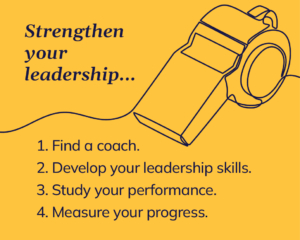
- Get a coach. Find someone who challenges your thinking, exposes blind spots, and helps you improve.
- Train, don’t just perform. Make time to develop your leadership skills, not just do your job.
- Study your performance. Revisit difficult meetings or decisions. What worked? What would you change?
- Measure your progress. Choose one behavior to improve and ask your team if they notice a difference.


Are You Solving the Wrong Problem?
How do you keep a drink cold in a place where electricity is unreliable? In an article published by the Journal of Management Studies, researchers explore how innovators find solutions when resources are limited. One example involves a beverage company facing exactly that challenge.
Rather than trying to make a conventional refrigerator work without reliable electricity, the team reconsidered what customers actually needed: a way to enjoy a cold drink. That shift helped lead to a solar-powered cooling solution.
The breakthrough wasn’t simply finding a different power source. It was reconsidering the problem they were trying to solve.
| The leadership perspective: Consider a team that keeps missing deadlines. Leadership assumes it’s an accountability problem, so they introduce more status updates, tighter reporting, and weekly progress meetings. But the deadlines keep slipping.
What if accountability was never the issue? Maybe the team is juggling too many priorities, everything is urgent, and new requests keep coming in without anyone deciding what can wait. Instead of addressing the real problem, leadership has added more work for a team that’s already struggling to keep up. It’s easy to become so focused on making a solution work that we stop questioning whether we’re solving the right problem.
| Why it’s worth zooming in: Constraints don’t always mean an idea is impossible. Sometimes they reveal assumptions that haven’t been questioned. A team struggling with limited resources may not need a bigger budget or more people. They may need permission to challenge the original plan. For leaders, that means knowing when to be clear about the outcome while staying flexible about the path. The goal is to give people something meaningful to solve without deciding in advance exactly how they must solve it.
| How leaders can sharpen focus:
- Revisit the original problem: Before investing more in a struggling initiative, ask whether you’re still solving the problem that started it.
- Look at what isn’t working: If more meetings, resources, or oversight aren’t improving results, question the approach before adding more.
- Challenge the non-negotiables: Ask your team which requirements are essential and which exist because someone decided they should.
- Give the problem back to your team: Share the outcome you’re after and invite solutions you haven’t already considered.


When the Obstacle Gets All Our Attention
An experienced mountain biker was once asked how he navigated obstacles on mountain trails. His answer was simple: when less experienced riders see a rock, they focus on the rock. He looks for the path around it.
It’s easy to understand the instinct. The rock is what could knock you off your bike. It deserves your attention. But you also need to find the opening, choose your route, and steer toward it.
In his article, How High Performing Teams Think Differently, Jon Patton shares how a client team member brought this story into a discussion about the challenges facing their business. Revenue pressures, supply chain issues, and a slowing economy gave them plenty to worry about. The cyclist’s observation brought a different question into view: Once we understand what’s in our way, are we giving enough attention to where we could go?
| The leadership perspective: Leaders need to help their teams see challenges clearly. But the way those challenges are discussed also shapes what people believe they can do about them. A conversation can become very thorough about the problem while remaining vague about the possibilities.
A team facing a budget reduction, for example, might spend most of its meeting explaining what it can no longer deliver. Those concerns may be valid. The next part of the conversation matters just as much: What remains most important? What could we approach differently? What choices are still ours to make?
| Why it’s worth zooming in: People pay attention to where leaders spend their attention. If every proposed idea receives a detailed explanation of why it won’t work, the team learns to anticipate objections. Over time, people may bring fewer possibilities forward because they expect the conversation to end in the same place.
Moving toward possibilities takes care, too. A quick “let’s focus on solutions” can leave people feeling that a real concern has been brushed aside. The useful shift happens when the team understands the obstacle well enough to begin exploring its options. Leaders help by making room for both parts of that conversation.
| How leaders can sharpen focus:
- Notice when the conversation starts repeating. If people keep offering more examples of the same problem, ask: “What do we still need to understand before we can discuss our options?”
- Ask what a concern rules out—and what it leaves open. A smaller budget may prevent hiring. Does it also prevent changing priorities, sharing expertise, or simplifying the work?
- Give possibilities the same attention as objections. When someone explains why an approach won’t work, ask: “What would need to change for it to become an option?”
- Check what people are leaving with. Before closing the discussion, ask each person to name the next step they believe the team agreed to take. Different answers reveal where the path is still unclear.