The Psychology of Being Human at Work
How much of what happens at work is really about the work?
A disagreement can become something deeply personal. One disappointing experience can change how we approach people we’ve never met. And stress can become so familiar that we barely recognize it anymore.
This month, Leadership Lens explores three pieces of research that reveal something fascinating about how we think, react, and relate to one another—not just at work, but in our relationships and within ourselves.
Each story isn’t just a headline—it’s a view worth bringing into focus.
November 2026 / Issue 13
You’re Not Having the Same Argument
Why does being misunderstood sometimes bother us more than being wrong?
| The Story Behind the Lens: We tend to think that putting our thoughts in writing makes disagreement easier. We have time to choose our words, organize our arguments, and avoid saying something we’ll regret. But a 2026 study published in Nature Communications suggests that speaking through disagreement can lead to more constructive exchanges than communicating in writing.
The interesting part? We may expect written disagreements to go better, even when speaking offers a greater opportunity for understanding.
| The leadership perspective: Think about the last time you felt misunderstood. Maybe someone questioned your decision at work, your partner interpreted a comment differently than you intended, or you spent the evening replaying a conversation, thinking about everything you should have said. There’s something particularly frustrating about feeling that someone has the wrong idea about us.
And sometimes, the harder we try to explain ourselves, the less we’re actually listening. We’re so busy defending what we meant that we stop hearing what the other person experienced.
How often are we trying to resolve a disagreement when what we really want is to feel understood?
| Why it’s worth zooming in: Conflict isn’t always about opposing opinions. Sometimes it’s about what we believe the disagreement says about us. When our competence, intentions, or judgment feel questioned, our instinct may be to defend ourselves rather than understand the other person’s perspective. This is where self-awareness becomes valuable.
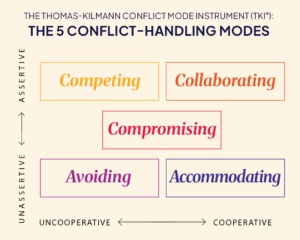
The Thomas-Kilmann Conflict Mode Instrument identifies five approaches to conflict:
- Competing
- Collaborating
- Compromising
- Avoiding
- Accommodating
None is universally right or wrong. The challenge is recognizing which approach we’re using, why we’re using it, and whether it’s actually helping.
| How leaders can sharpen focus: The next time a disagreement becomes frustrating, notice what you’re trying to accomplish. Are you working toward understanding, or trying to prove that your intentions were good? Sometimes the most productive thing we can do in a disagreement is stop defending ourselves long enough to become curious about the other person.

Your Workday Ends. Does Your Mind?
The strangest thing about stress is how normal it can start to feel.
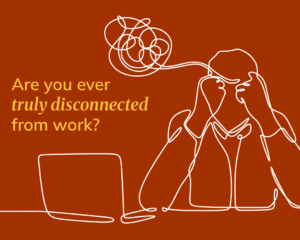
| The Story Behind the Lens: You close your laptop. Your meetings are finished. Nobody needs anything from you right now. So why are you still thinking about work? An October 2026 study published in Occupational Health Science examined how daily workload and supervisor support influence employees’ ability to mentally disconnect from work. Researchers found that employees whose supervisors supported recovery generally reported better psychological detachment in the evening.
It suggests something worth considering: switching off isn’t entirely a matter of personal willpower. The expectations and behaviors of the people around us may play a role, too.
| The leadership perspective: Stress doesn’t always feel like stress. Sometimes it looks like answering emails while eating lunch, rushing through a conversation because your mind is already on the next task, or feeling impatient with someone you love over something that wouldn’t ordinarily bother you.
- It can follow us from one meeting to the next, into our homes, and even into the moments we finally have to ourselves.
- When that becomes our everyday experience, we stop noticing it. We tell ourselves we’re just busy, that everyone feels this way, that things will settle down after the next deadline.
But what happens when the next deadline always comes?
| Why it’s worth zooming in: There’s an important difference between being able to function under pressure and being able to recover from it. We can become remarkably capable of handling demands while paying less attention to what those demands are doing to our attention, relationships, and well-being. And while we often approach stress as something individuals need to manage better, the conditions surrounding us matter, too.
Leaders influence those conditions through what they expect, reward, and model. A team can be encouraged to prioritize well-being while simultaneously learning that constant availability is what earns recognition.
| How leaders can sharpen focus: Pay attention to what happens when the workday is supposed to be over. Are people genuinely free to disconnect, or have we created expectations that keep everyone mentally on call? And consider your own experience …
Are you getting better at managing stress, or simply more accustomed to living with it?

The Last Person Who Let You Down
Why does one betrayal sometimes outweigh a hundred good experiences?
| The Story Behind the Lens: We like to think we judge people based on how they treat us. But what happens when our expectations have already been shaped by someone else? A 2026 study published in the Journal of Experimental Social Psychology explored how experiences of trust can influence our expectations in future interactions.
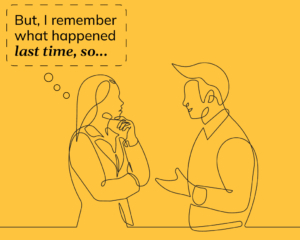
The researchers found that an experience with one person could influence how willing someone was to trust a different person afterward. In other words, we may approach a new relationship with expectations shaped by someone who isn’t part of it.
| The leadership perspective: Think about someone who disappointed you. Maybe it was a manager who promised an opportunity that never came, a friend who shared something you told them in confidence, or a time you trusted your own judgment and things didn’t turn out as you’d hoped. Those experiences can change the way we approach what comes next.
We question people’s intentions, hesitate before relying on someone, or second-guess decisions we once would have made without much thought. And sometimes, without realizing it, we carry the memory of one experience into an entirely different relationship or situation.
The person or experience that taught us to be cautious may be long gone. But how much influence does it still have?
| Why it’s worth zooming in: Experience is one of the ways we develop judgment. We notice patterns, remember outcomes, and use what we’ve learned to make decisions. But there’s a distinction between learning from experience and assuming that a previous experience predicts what will happen next.
- In leadership, this can influence how readily we delegate, how much independence we allow, and how quickly we question someone’s judgment.
- In our personal lives, it can influence how easily we open up, ask for help, or give someone the benefit of the doubt.
Experience can make us wiser. But it can also make us more certain about things we haven’t yet tested.
| How leaders can sharpen focus: The next time you find yourself hesitant to trust someone, consider where that hesitation is coming from…
- What has this person actually shown you?
- What might you be carrying into the relationship from somewhere else?