By Tim Matson – January 2026
Most high-performing leaders don’t struggle with discipline.
They set goals. They make plans. They commit. When they decide something matters, they follow through.
Which is why moments like New Year’s resolutions are so interesting—not because they’re about goals, but because they quietly reveal something deeper.
January doesn’t create new problems.
It exposes existing ones.
That became clear to me in a conversation I had with a friend not long ago. We were talking about New Year’s resolutions, and he told me that almost every year, he sets the same one. He starts strong, feels focused, and genuinely believes this will be the year it sticks.
And then, a few weeks in, life picks up. Work accelerates. Priorities stack. And without a conscious decision, he returns to the same patterns he was trying to change.
What struck me wasn’t a lack of effort. It was how familiar the pattern felt.
Because I’ve done the same thing.
Most of my resolutions tend to focus on self-care, maintaining my energy and focus—exercising consistently, strengthening my meditation practice, and creating more space to recover.
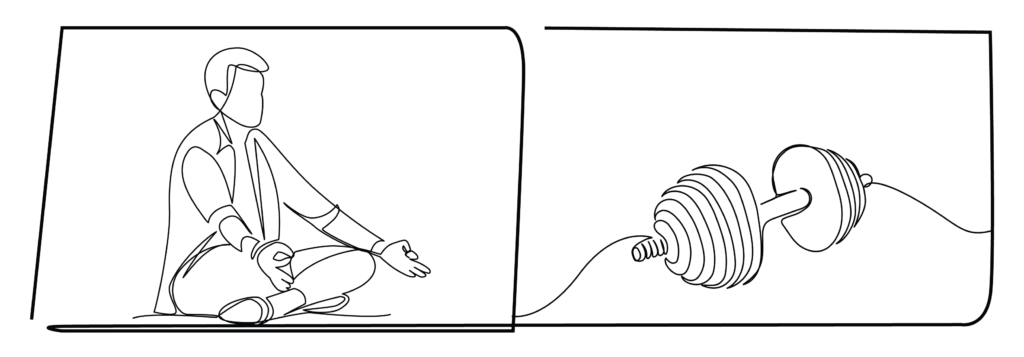
I don’t just intend to change—I invest.
Programs.
Memberships.
New apps.
I learn how they work. I follow the plan.
For a while, it works.
Then something predictable happens.
Not laziness.
Not failure.
A default behavior.
What Resolutions Really Reveal
Resolutions aren’t about willpower. They’re a stress test. They show us what happens when good intentions collide with real demand.
When time compresses and everything feels urgent, we don’t default to what we say matters. We default to what we’ve learned and the identities we’ve been operating from.
That’s why certain commitments are the first to go. Not because they aren’t important, but because something else quietly outranks them when decisions must be made.
In our work, we call these belief systems.
Not beliefs we have of others, but beliefs we have about ourselves—the internal rules we operate by. They’re shaped by what we observed and learned and what’s worked for us in the past, and they quietly determine what we protect, prioritize, or postpone.
These belief systems don’t live in our heads as ideas.
They operate in our subconscious and often act as a program that is always running.
They show up in our behavior.
Belief Systems Under Pressure
I’ve seen this same pattern play out repeatedly in organizations and leadership teams. Leaders attend trainings, learn new approaches, and leave with real intention to lead differently.
And for a while, they do.
Until pressure increases. Deadlines tighten. Stakes rise. And without a conscious decision, familiar behaviors return—not because the learning didn’t matter, but because default behaviors and our belief systems take over.
This is the gap most leadership development never reaches.
Not because the tools are wrong, but because behavior isn’t the first thing that changes under pressure. What changes first is what we believe we need to do to stay safe, effective, or in control.
At Stop At Nothing, this is the level we work at. Until those internal rules are visible, even the best learning gets overridden when it matters most.
When I First Saw This in Myself
That’s not just something I’ve observed in organizations.
It’s something I’ve experienced firsthand.
Earlier in my career, I received feedback from my team that I was micromanaging. At the time, that wasn’t how I saw it at all. I thought I was being supportive. I thought I was helping by staying close to the work.
But when I paid attention to my behavior under pressure, a pattern showed up.
When things felt uncertain, I had a strong need to stay in control. That belief had been shaped long before I became a leader, and for a long time, it had served me well. Being closely involved helped me succeed.
Over time, though, that same belief started to limit me. It made delegation harder. It pulled me into situations that didn’t actually require my involvement. And it kept others from fully stepping into growth opportunities.
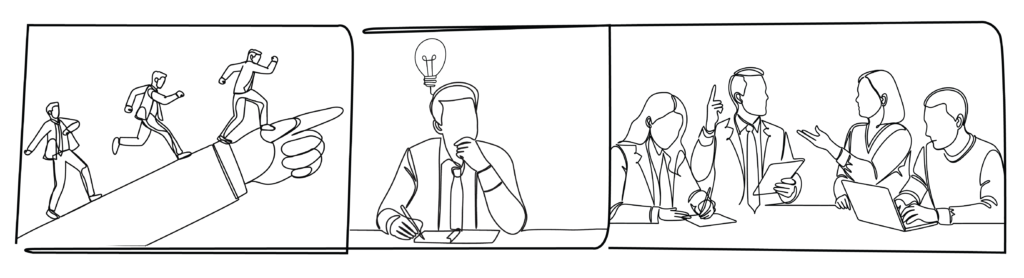
What changed wasn’t learning a new leadership technique. It was noticing the belief driving the behavior. Once I could see it, I started asking myself simple questions in the moment: Do I actually need to be involved here, or is this my need for control showing up? What would happen if I let someone else lead this work?
That awareness created space for a different choice—and different results.
Noticing Your Own Defaults
This is where the work gets practical.
You don’t need to label your belief system or analyze where it came from to start noticing it. You just need to pay attention to what shows up.
A few questions that can help:
- What do I consistently default to when things feel urgent?
- What gets my attention immediately, without much thought?
- What types of situations are a trigger for me?
- Where do I feel tension when I consider doing something differently?
The answers to those questions may point to some of the beliefs you’re operating from—not the ones you’d choose on paper, but the ones shaping your behavior under pressure.
For example, if you consistently default to a behavior taking care of everything else before yourself, the belief might sound like my needs come last. If you get emotional anytime anyone gives you feedback, even if warranted, then there may be a belief that you are not good enough.
Once you can connect the behavior to the belief underneath it, you’re no longer just reacting. You have a choice.
Interrupting the Default
Once you can see a default behavior clearly, the question becomes what to do when it shows up in real time.
For me, one belief that’s been important to notice is this: put others first. It’s a belief I value, and one that has served me well throughout my life and career. It’s part of how I’ve built trust and taken responsibility as a leader. I truly love this about me.
However, that belief can quietly take over the decision-making, and have a negative consequence. It can tell me to put myself last, even when that is detrimental to the situation.
That’s the moment the default needs to be interrupted.
One simple way I’ve found to do that is through an affirmation.
Not as a motivational phrase or a way to “think positively,” but as a deliberate pause. A way to help rewire our default belief systems. A moment to slow the reaction just enough to make a conscious choice instead of slipping back into what’s familiar.
Used this way, affirmations aren’t about changing who you are. They’re about creating space between the belief driving the behavior and the decision you’re about to make.
Affirmations have three important characteristics:
- Personal: stated in your own words, using “I.”
- Present: stated as something happening now, not in the future.
- Directional: focused on what you want to reinforce, not what you’re trying to stop. For example, if your default behavior is to step in and take over, an affirmation like “I don’t micromanage” keeps your attention on the behavior you’re trying to avoid. A phrase like “I trust my team to own their work” reinforces the behavior you want to practice instead.
For me, when self-care is important, my default behavior puts everything and everyone else first. I do other things versus going to the gym, or meditating.
The affirmation I am using when I notice this behavior is:
“I am worthy of a healthy body.”
I use the phrase not as a declaration that I’ve solved the problem, but as a reminder to interrupt the pattern long enough to choose differently.
The Real Work Behind Resolutions
If you find yourself repeating the same resolutions year after year, it may not be because you lack commitment or discipline.
It may be because you’re trying to build new outcomes on top of old belief systems.
What’s worked for you in the past likely helped you succeed. But if it’s never examined, it may also be quietly limiting what’s possible now.
The work isn’t about trying harder.
It’s about noticing what takes over when pressure shows up—and deciding whether it still deserves to run the show.