
By Stacey Meade – August 2026
The hidden roles leaders adopt under pressure—and how to make a more intentional choice.
A few days before an important client presentation, she reviewed the work her team had prepared. It wasn’t quite right. The details were off, the quality fell short of her standards, and time was running out.
So she made a decision I have seen many capable leaders make: “I’ll just fix it myself.”
Maybe you have made that decision yourself. You are protecting the quality of the work, meeting a deadline, or trying not to disappoint a client. In the moment, stepping in can feel like responsible leadership.
Sarah reworked the presentation herself, delivered it to the client, and received exactly the response she wanted. The client loved it.
But after the meeting, she came into my office frustrated. Her team, she told me, simply wasn’t capable of delivering what she needed. She needed different people. How was she supposed to perform with the team she had?
As I listened, I realized that in the course of one project, she had moved through three different leadership roles—and reinforced the very problem she wanted to solve.
The roles we play under pressure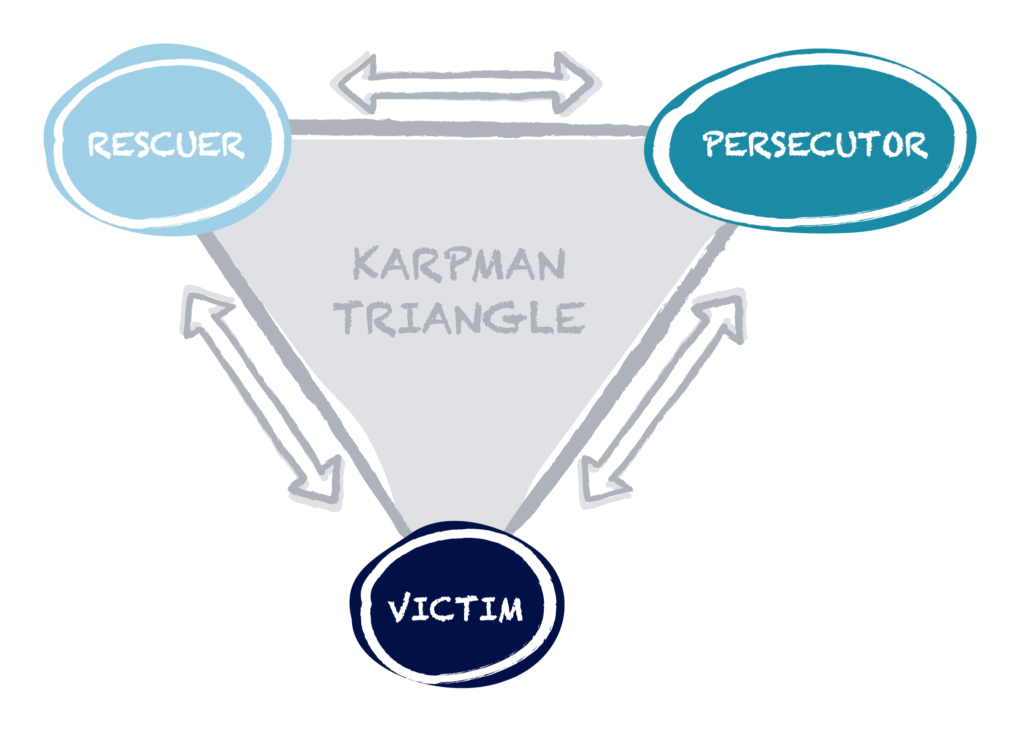
Psychiatrist Stephen Karpman described this pattern through the Karpman Triangle, a model suggesting that people under stress often step into one of three roles: Victim, Persecutor, or Rescuer.
These are not personality types or fixed identities. They are temporary ways of interpreting and responding to pressure, uncertainty, or conflict. We can move between them quickly, sometimes within a single conversation.
Each role can also feel productive in the moment. That is what makes the pattern so difficult to recognize.
The Persecutor: High standards become control
Sarah’s intention was positive from the beginning. She cared deeply about her client and wanted to deliver outstanding work.
Before the presentation, she gave her team exacting instructions—down to the font size and precisely how every element should look. When the draft did not match her expectations, her attention went immediately to its flaws.
Persecutors do not always look aggressive. Sometimes they look like perfectionists or relentless nitpickers. The behavior may sound like accountability, candor, or commitment to excellence.
But accountability without curiosity can quickly become blame, and high standards without room for judgment can become micromanagement.
The Rescuer: Helping becomes taking over
With only a few days remaining, Sarah told herself there was no time to coach the team and let them revise the presentation. It would be faster to do the work herself.
That decision solved the immediate problem. It also removed the team’s opportunity to learn from the feedback, practice making improvements, and build the judgment she wanted them to demonstrate.
The Rescuer role is difficult to recognize because it often looks like generosity, expertise, or commitment.
But helping and rescuing are not the same thing. Helping builds another person’s capacity. Rescuing removes the discomfort before growth can occur.
The Victim: Dependence becomes proof
After the client praised the final presentation, Sarah shifted roles again. She no longer saw herself as the person enforcing standards or saving the work. She saw herself as trapped by a team that could not perform without her.
Her frustration was real. But she could not see how her earlier choices had helped create the dependence she now resented.
The story had shifted from “This team needs more coaching” to “I have no choice but to do everything myself.”
In a single experience, she moved from Persecutor to Rescuer to Victim. Each role made the next one feel justified.
Her intention never changed. She wanted to protect the client relationship, uphold a high standard, and deliver excellent work. But her impact told a different story. Her criticism made the team more dependent on her, taking over denied them the chance to grow, and their dependence then reinforced her belief that she had to do everything herself. This is the leadership work: becoming aware of the pattern early enough to choose behavior that creates the impact you intend—especially under pressure.
From reactive roles to high-impact choices
The Karpman Triangle gives us language for the pattern, but awareness is not the finish line. Awareness matters because it creates choice. The question is no longer simply, “Which role am I playing?” It becomes, “How do I keep the standard, stay accountable, and lead in a way that builds capability rather than dependence?” Leadership author David Emerald’s Empowerment Dynamic offers three practical shifts:
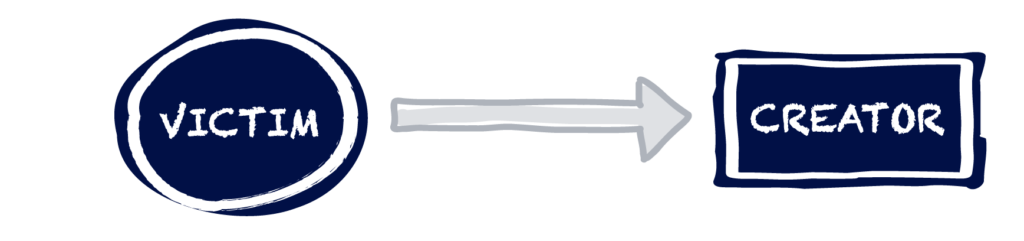
The Victim becomes the Creator—shifting attention from what cannot be controlled to what can still be influenced.
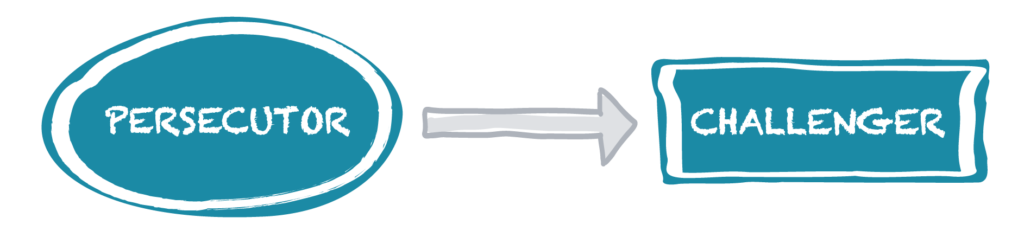
The Persecutor becomes the Challenger—holding the standard while creating the conditions for someone else to meet it.
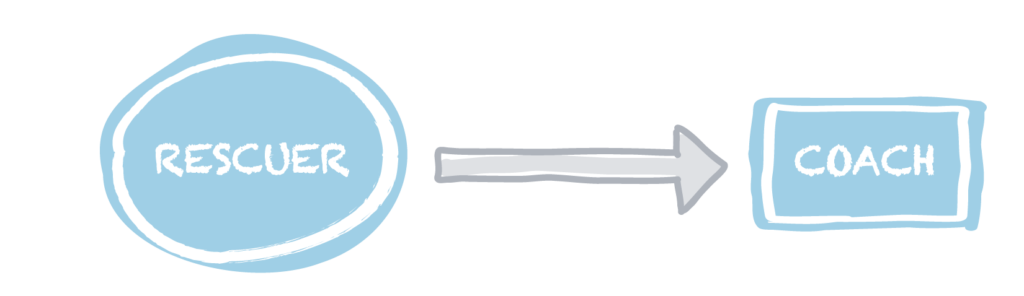
The Rescuer becomes the Coach—providing support without taking ownership away.
A Creator does not deny obstacles or pretend circumstances are fair. The Creator asks, “What can I influence from here?” Attention moves from helplessness to the next meaningful action.
A Challenger still holds people to high standards, but pairs accountability with curiosity and respect. The Challenger clarifies expectations, surfaces obstacles, and gives others the opportunity to improve.
A Coach resists the urge to solve every problem. Instead of immediately offering the answer, the Coach might ask, “What have you already considered?” or “What do you think the next step should be?”
In the presentation story, that shift would not have required lowering the standard or risking the client relationship. It might simply have meant identifying the most important changes, explaining why they mattered, and giving the team a chance to revise the work before stepping in.
The goal is not to withdraw support. It is to provide support in a way that strengthens another person’s ability to act.
A pause you can use
The next time you feel yourself criticizing, taking over, or giving up, pause before you react. Ask yourself: What outcome am I trying to create? What support or accountability would help without taking ownership away? And what is one choice I still have?
Those questions create just enough space to move from reaction to agency—and to choose a response that supports both the immediate result and the long-term growth of your team.
Notice the story before it becomes the pattern
Leadership is not about avoiding these roles forever. It is about recognizing when we have stepped into one before it begins shaping every conversation that follows.
The next time a difficult situation arises, pause before asking, “Who is the problem?”
Ask a different question:
What story am I telling myself right now, and is it helping me lead?
Recognizing these patterns in other people is often easier than recognizing them in ourselves—especially under pressure, when our reactions feel completely justified.
Most of us can recognize all three roles. Under pressure, however, we usually have one we reach for first. You might tighten control, step in and solve the problem, or decide that nothing you do will make a difference.
Which role do you reach for—and what does it invite from the people around you?
Our two-minute leadership assessment can help you identify the role you are most likely to step into when tension rises, see how that pattern may be affecting your team, and choose a more constructive response for your next difficult conversation.
Discover your default role:
Take our “What story are you stepping into?” assessment.
