Embracing Discomfort to Make Possibility A Reality
If it scares you, it might be a good thing to try.


If it scares you, it might be a good thing to try.

Yes, when we defend or argue for our weaknesses, we don’t change. We can see this from two perspectives: The inside-out and the outside-in. Inside-out has to do with how we talk to ourselves and, more importantly, how we convince ourselves not to do or say what could positively change our lives. Outside-in looks at the impact on ourselves and others—specifically, our teams and organizations—when we defend, rationalize, or justify our ineffective behaviors when we get derailed.

Overload, exhaustion, and burnout are not badges of honor or status symbols; they are signs of an unhealthy workplace. When our default answer to every request is set to yes, we usually end up overextended and resentful. So, how can we begin building healthier boundaries? In this blog post, Cecilia takes a look into one of the most important aspects of self-care: saying no.
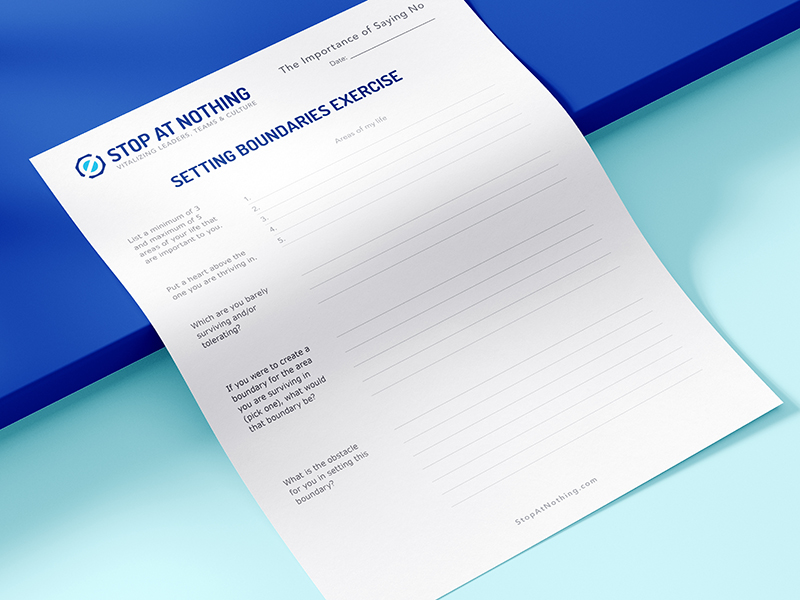
Download this exercise to begin your journey to work-life balance.

Every case of COVID-19 is someone’s story, and too many of those stories don’t have happy endings. Survivors of serious illness or tragedy are inevitably changed, and their perspective on life, professionally and personally, changes afterward. That perspective may be negative in some situations. Other times it’s quite positive.

It’s not just you. Many successful professionals are feeling like they’re just barely holding their heads above the water as life’s pressures have become heavier and heavier.

Ready to overcome those obstacles?

It’s not just you. Many successful professionals are feeling like they’re just barely holding their heads above the water as life’s pressures have become heavier and heavier. So what’s the solution for tackling everything 2020 throws at us?

Mindful leaders who are motivated by the best interests of the people around them as well as the organization become more effective, while those who are self-centered are less so.

In order to begin interrupting ineffective patterns we must observe ourselves and to pay attention to what is at play here.