Inside the coaching room: what happens when leaders stop asking who needs to change and start asking what they can do differently
By Jennifer Rockwell – September 2026
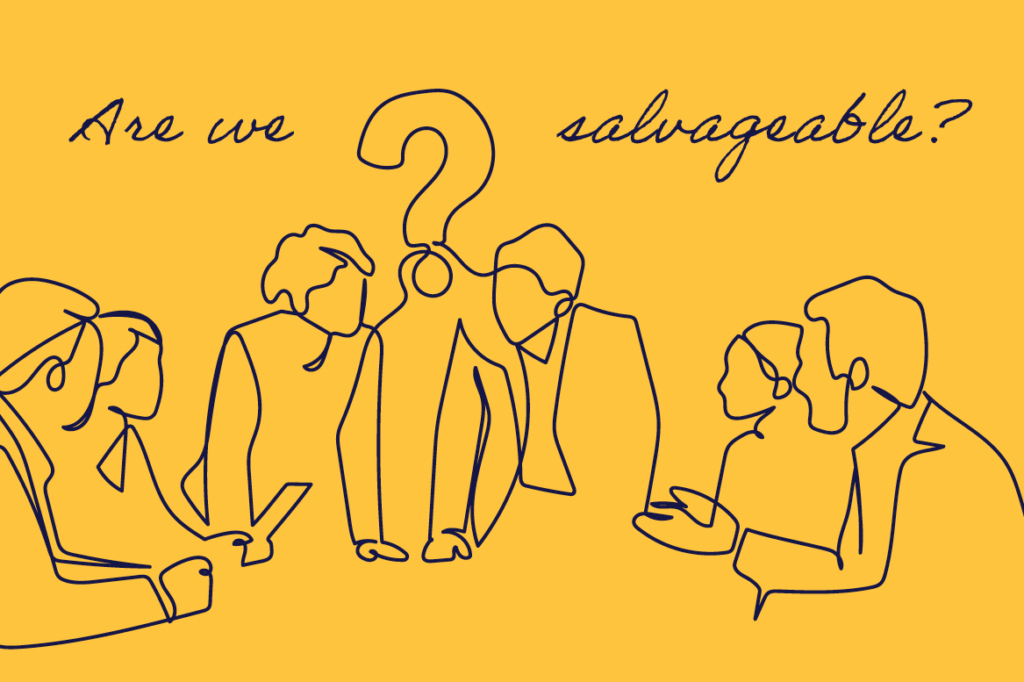
“Are we salvageable?,” asked Michael, Chief Operating Officer for a specialty insurance company, at the end of a preparation meeting for his leadership team’s alignment session.
My answer came quickly: “If you choose to be.” The room went quiet.
Maybe you’ve asked yourself some version of that question before, about a team, a relationship, a career, or something you’ve put years into that suddenly feels harder than it should. Michael wasn’t wondering whether his team had talent. They were intelligent, experienced, and deeply committed to the organization, but years of frustration, missed opportunities, and unresolved tension had started to feel like too much to overcome. Their challenge wasn’t competence. It was choice.
The pattern beneath the politeness
In meetings, leaders defended old decisions rather than exploring new possibilities, difficult conversations were postponed or avoided, and feedback was explained away. When friction surfaced, people could quickly identify what others needed to change but struggled to identify what they themselves could do differently.
From the outside, Michael’s team probably wouldn’t have looked dysfunctional. They weren’t openly hostile. In fact, they were remarkably polite, supportive, and caring. But important conversations happened after meetings instead of during them. When someone had an issue with a coworker, they often went to Michael or another person on the team instead of addressing the person directly, and one person had even earned the nickname “the team therapist” because so many others went to them to talk through their frustrations.
Frustration traveled around the team instead of to the person who needed to hear it, and mistrust grew. Sometimes people withheld work; other times they did someone else’s work for them rather than having the uncomfortable conversation about a missed deadline or unmet expectation. What looked like an interpersonal problem was beginning to affect how work moved across the organization.
Ironically, many of the leaders were acting from good intentions. They wanted to protect their teams, defend good work, and prevent mistakes, yet those protective instincts were creating silos, reducing collaboration, and weakening the very trust they hoped to preserve.
Nobody intended to create mistrust, but the ways they were trying to protect one another were actually reinforcing the very dynamics keeping the team stuck. This is often the first important shift in coaching: making the pattern visible. Once leaders can see what is driving the behavior, they have a chance to choose differently.
Turning the mirror around
Seeing the pattern was only the beginning. The work with Michael and his team was to turn the attention away from everything they wanted one another to change and toward the one place each leader actually had influence: themselves.
Rather than staying with the question, “How do we fix this team?” the more useful question was:
What am I willing to do differently?
For Michael’s team, that meant getting specific:
- What conversation am I avoiding because I’m afraid of how the other person might respond?
- Where am I talking about someone instead of talking to them?
- Where am I protecting my team in a way that is creating a silo?
- What feedback have I explained away rather than gotten curious about?
- Where am I waiting for someone else to change before I’m willing to change?
These aren’t comfortable questions, particularly for experienced leaders who are used to solving problems. But that discomfort is often where the real work begins. The coaching wasn’t about deciding who was at fault; it was about helping each leader recognize their own contribution to the dynamic and see what was actually within their control.
The team needed to stop letting issues fester and instead provide feedback to one another in an open, caring, and direct way. Doing that meant confronting the fears of failure and rejection that made those conversations so easy to avoid in the first place.
What are you willing to trade?
Leaders often spend enormous amounts of energy focusing on things outside their control. They wish for different colleagues, different structures, different markets, or different decisions from senior leadership. We come across difficult colleagues, organizational decisions we disagree with or even feel violate our values, economic conditions we didn’t anticipate, and situations that are genuinely unfair.
Those frustrations are real and sometimes entirely valid, but even when circumstances aren’t our fault, we still have a choice about our response. Responsibility does not mean being at fault; it means having ownership for what comes next. At its core, every fundamental leadership choice is a choice between protecting ourselves and growing ourselves.
So the question becomes: What are you willing to trade?
- Being right for being effective?
- Ego for curiosity?
- Blame for ownership?
- Old stories for new possibilities?
These choices sound simple on paper, but they become much harder under pressure, when familiar patterns can feel protective. That is why awareness matters: when a pattern becomes conscious, a leader has more room to choose a different behavior instead of automatically repeating the old one.
When the question becomes personal
This pattern isn’t limited to leadership teams. I’ve seen it play out repeatedly in individual leaders as well. Years ago, I worked with a leader struggling through difficult team dynamics. Every setback had an explanation, every missed opportunity had a cause, and every disappointment could be traced to someone else’s behavior.
In his previous role, he blamed his boss for not supporting his decisions, his peers for not collaborating with him to achieve his goals, and internal team politics for hindering his ability to grow his business. His belief was that the problem wasn’t him: if everyone saw things his way, did their jobs, and provided him the resources he needed, he’d succeed.
Eventually, the CEO told him the issue was him, that he didn’t work well with the team, and that his behaviors needed to change or he would be out of a job. The feedback wasn’t new; others had raised similar concerns before. For the first time, however, he stopped defending himself long enough to consider a different possibility.
Recently, we reconnected and he reflected on that period. “When I finally made the choice,” he said, “it was my choice.” He had finally been willing to ask:
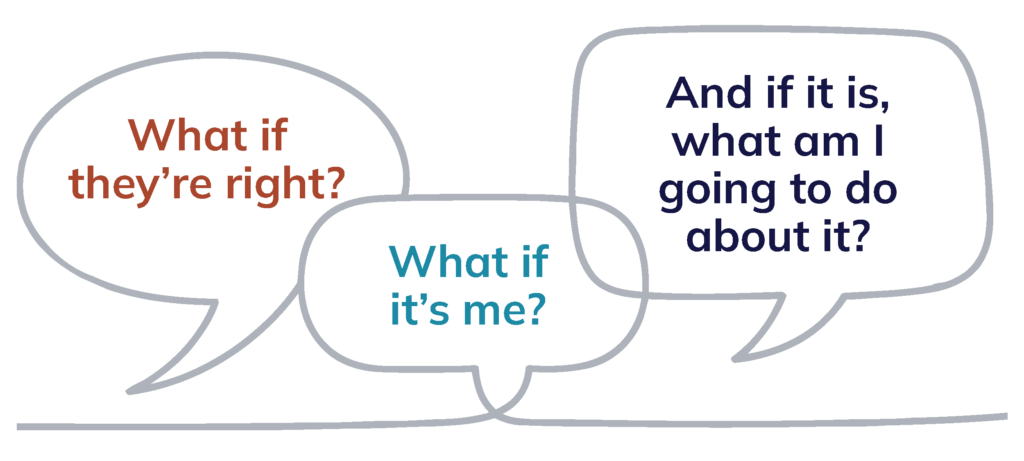
After the agony and pain of blaming others took a toll on him, he answered these questions and realized he needed to change, and in fact, he needed to make the choice to change. Once he did that, all of these things felt within his control, solutions became clearer, and he ultimately moved into a role he enjoyed and was successful at.
Ownership is not self-blame
Every leader eventually faces a fundamental choice: continue explaining why change isn’t possible, or choose to become part of the change.
Accountability without grace becomes judgment. Grace without accountability becomes excuse-making. Effective leaders practice both, holding humanity and high standards at the same time. They acknowledge that people are imperfect, circumstances are complex, and change is difficult. Yet they also recognize that growth begins the moment we stop waiting for someone else to solve a problem that belongs to us.
Ownership is not self-blame. Ownership is recognizing that even when circumstances aren’t our fault, our next step is still our responsibility.
The question you leave with
“Are we salvageable?” It’s a question organizations ask. Teams ask it. Leaders ask it. Sometimes we ask it about ourselves. The answer is usually less dependent on our circumstances than we think.
We cannot control every challenge we face, every outcome, or the choices of others. But we can control our own.
And leadership, growth, trust, and transformation often begin with one fundamental choice:
Stop asking, “Why is this happening to me?” and start asking, “What am I going to do next?”
Reflection Questions
- What challenge am I currently blaming on circumstances?
- What part of this situation is within my control?
- What conversation am I avoiding?
- What would ownership look like in my next step?